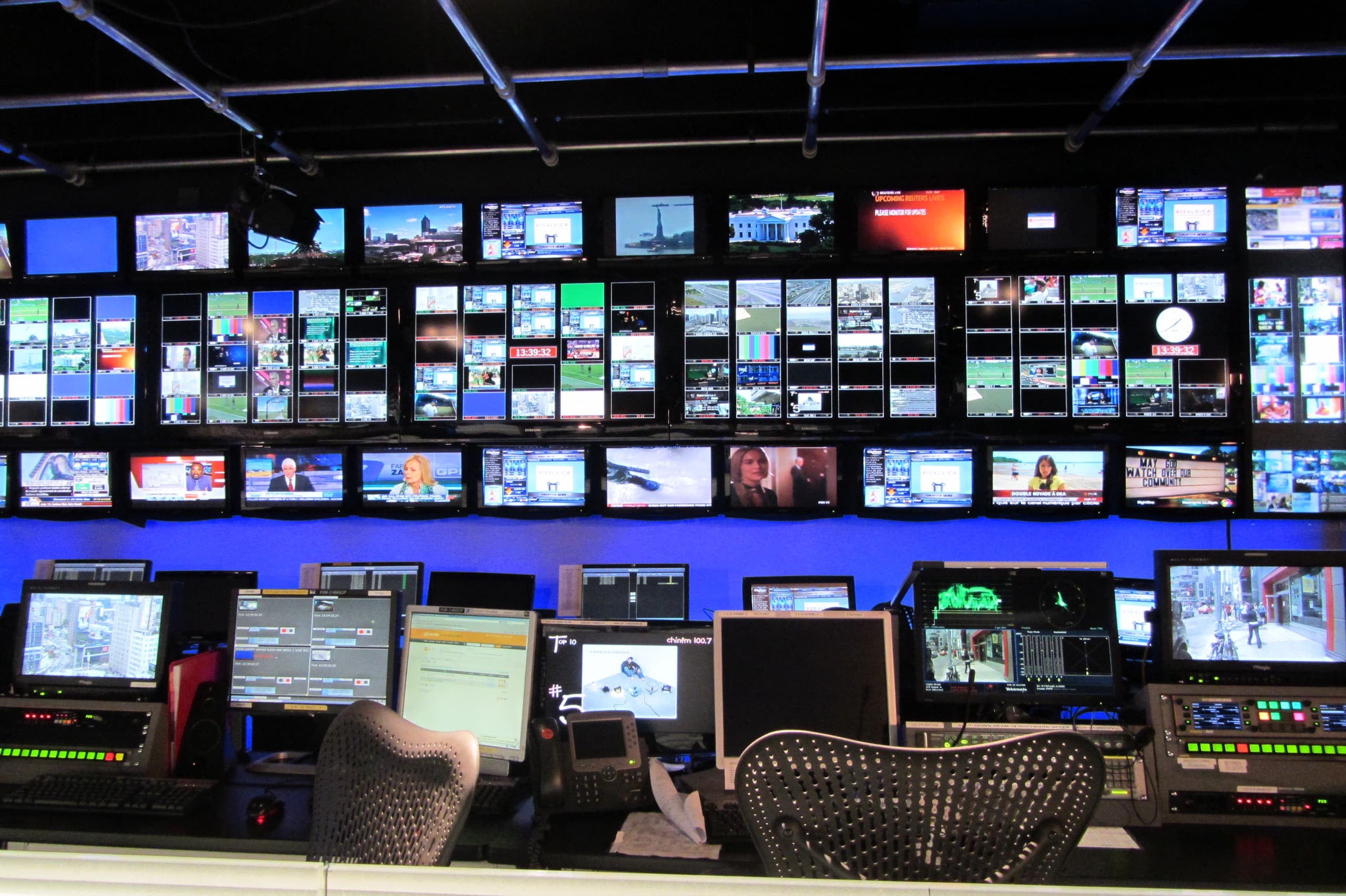
Implementation, live production & operations
Scoped. Rehearsed. Measured. Then live.
Process
Four steps, every time.
- 01
Understand requirements
Venues, languages, audiences, destinations, approval chains and the legal team's policies — captured in a run-of-show and a risk register.
- Language & venue matrix
- Approval policy
- Connectivity survey
- 02
Configure venues and workflows
Feeds, language outputs, delay ranges, disclosure templates and polling calendars are configured, then rehearsed end-to-end.
- Signal plan & failover
- Rehearsal sign-off
- Latency measurements
- 03
Deploy and operate live
Our crew runs master control and language desks alongside your team, with named operators on every human gate.
- Staffed control desks
- Live incident log
- Approval records
- 04
Report, review and archive
Viewership, delivery, incidents and approvals are reported; assets and evidence packages are archived to your retention rules.
- Post-event report
- Evidence package
- Retention & deletion log
Onsite production
Flypack or OB control at the venue, local language desks and on-ground crew. Best where connectivity is uncertain.
Remote production
Camera and audio contribution from the venue to a central control room that serves many events in a day.
Hybrid
Capture and safety-critical control onsite; language processing, clipping and monitoring centralised.
Live production crew
Named people on every gate.
Automation does the heavy lifting. People make the decisions — and every decision is logged against a role.
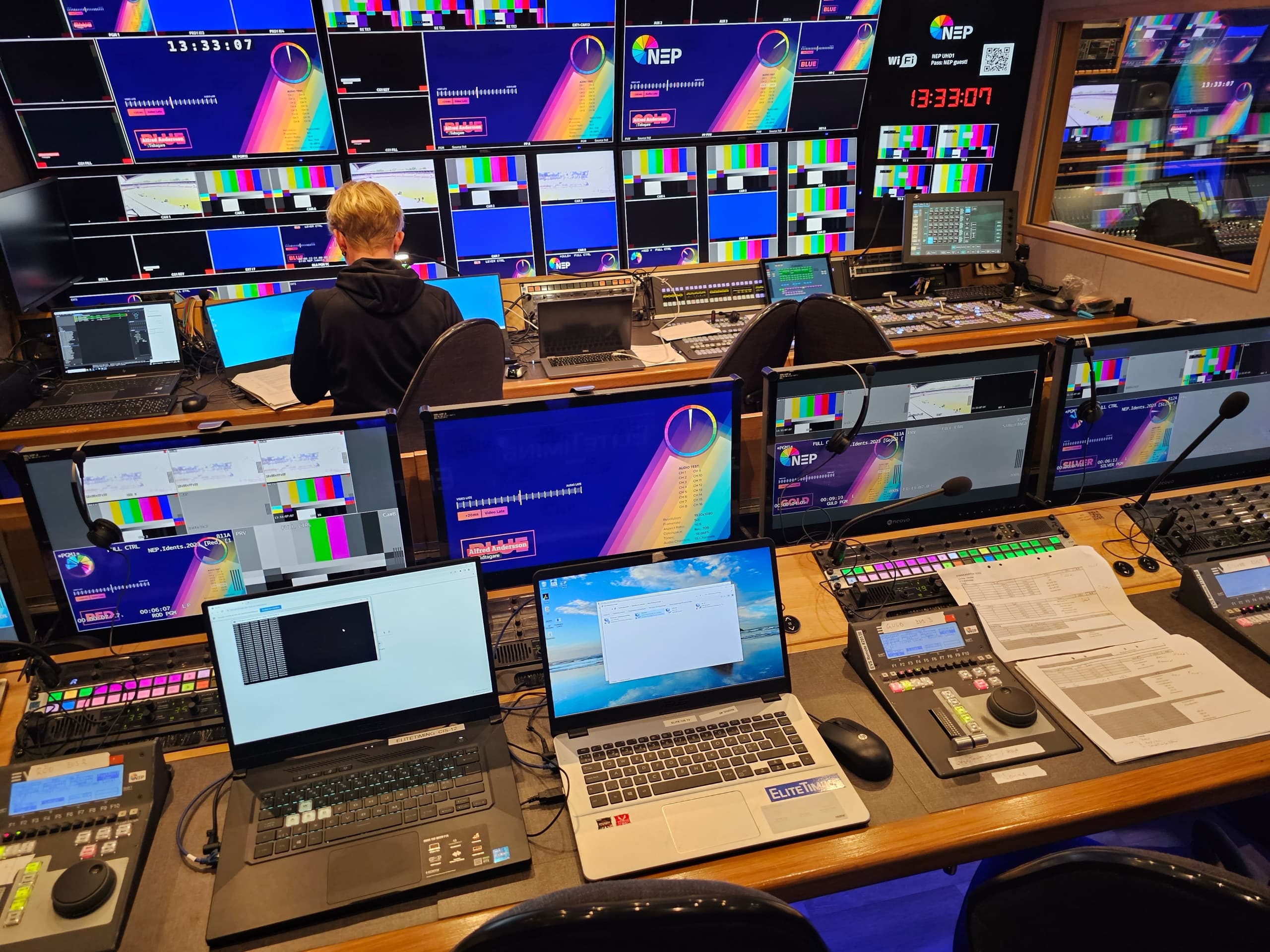
Broadcast director
Owns the programme, the run-of-show and every take.
Master control operator
Delay, bleeps, cuts, standby and signal health.
Language operators
One per language group, watching every output.
Audio engineer
Stage mics, language programmes and PA feeds.
Research & review desk
Claims, sources and recorded conclusions.
Compliance coordinator
Disclosure checks, calendars and evidence exports.
Field technicians
Venue links, LED processors, gates and scanners.
Client liaison
Your single point of contact in the control room.
Infrastructure
Two of everything that matters.
- ContributionBonded cellular, fibre or satellite, chosen from the site survey — always with a second path.
- Venue integrationLED processors, PA matrices, press multi-boxes and camera risers.
- Power resilienceUPS on control and encoders; generator changeover rehearsed.
- ProcessingLanguage pipelines sized per language count and validated at rehearsal.
- AccessSingle sign-on, role-based permissions and audit logs on every console.
- Data handlingAgreed hosting regions, encryption in transit and at rest, retention by purpose.
Rehearsal & validation checklist
- End-to-end latency measured per language and destination
- Primary-to-backup failover drilled on every contribution path
- Language outputs reviewed by native-speaker operators
- Bleep, mute and cut-to-standby tested from every desk
- Approval chain walked through with named approvers
- Polling calendar and restriction rules checked with counsel
- Venue capacities and density thresholds agreed with organisers
- Incident escalation tree and contact list signed off
Capabilities marked “requires deployment validation” on this site are confirmed through this checklist for your venues before go-live.
Questions
Before you ask.
During live events, an escalation line and a named incident lead are assigned in the run-of-show.
Voiced language outputs use generic synthetic voices or human interpreters — never an imitation of a real person’s voice.
How quickly can you deploy?
It depends on the number of venues, languages and destinations, and on site access for surveys. We agree a schedule after the requirements call rather than promise a fixed lead time.
Do you guarantee a specific latency?
No. Latency depends on links, language pairs, voice settings and destinations. We measure it during rehearsal and share the figures for your venues before you go live.
Can our own team operate the consoles?
Yes. Many clients run hybrid crews: our operators lead the technical desks while your communications and research staff hold the editorial and approval roles.
Who owns the recordings and records?
You do. Recordings, transcripts, approvals and evidence packages are delivered to you and retained or deleted according to the retention schedule in your contract.
Do you work for any party exclusively?
No. We are an independent, nonpartisan technology-services provider and do not represent, endorse or act for any party, candidate or government body.
Your Campaign.
One Connected Broadcast Ecosystem.
Let us demonstrate how multilingual live production, campaign monitoring and operational oversight can work together.